
Carbon Optimized REforming
CORE™ Catalyst for SMR and CO2 Reforming.
Improve the performance of your existing reformer. Put CO2 to work as feedstock. Produce the syngas your process needs.
HYCO1’s CORE™ Catalyst brings non-coking performance, operating flexibility, and productive carbon use to steam methane reforming, dry methane reforming, and Bi-Reforming. One catalyst supports efficiency upgrades today and a pathway to greater CO2 utilization.
Improve your existing SMR
An SMR catalyst that does more with your existing reformer.
HYCO1's CORE™ Catalyst is a drop-in steam methane reforming (SMR) catalyst for operators seeking better efficiency, reliability, and output from the assets they already own.
Replacing your existing SMR catalyst with CORE improves reforming performance while opening a route to CO2 utilization. You can start with a catalyst replacement, optimize operating conditions, and add CO2 feedstock as your facility’s requirements evolve.
Convert more of the carbon already in your process.
CORE enables an additional reforming reaction between residual methane and byproduct CO2, producing more hydrogen and carbon monoxide. This puts more available carbon into useful syngas and reduces methane leaving the reformer unconverted.
For hydrogen producers, additional carbon monoxide can be converted into hydrogen through downstream shift reactors, increasing the value recovered from the feedstock.
Reduce steam requirements.
CORE’s non-coking chemistry allows lower steam-to-carbon operation in traditional SMR applications. Less steam to generate and heat means lower energy demand and operating costs, while giving operators more flexibility to match production requirements.
Improve flow and operating flexibility.
Spherical catalyst geometry supports uniform packing and lower pressure drop, creating opportunities to increase throughput and debottleneck production. CORE supports feed increases of up to 35% and turndown of up to 50%, with little to no change in conversion efficiency.
Maintain reliable performance.
CORE’s pre-sintered, solid-solution structure prevents graphitic coke formation and resists metal migration. Its strength and high-temperature durability support stable operation for the full life of the catalyst.
SMR + DMR
Bi-Reforming: turn CO2 into valuable syngas.
Bi-Reforming combines steam methane reforming and dry methane reforming, using methane, CO2, and steam together to produce syngas—a mixture of hydrogen and carbon monoxide.
CORE makes CO2 a productive part of the feedstock mix. By converting CO2 alongside methane, producers can reduce natural gas feedstock demand, improve carbon utilization, and tailor syngas composition to downstream requirements.
HYCO1 forecasts Bi-Reforming will account for the most future applications of CORE™ Catalyst.
Bi-Reforming can be integrated into an existing reforming facility or designed into a new plant using HYCO1’s CUBE™ Technology.
Up to 50% less natural gas feedstock.
Using CO2 as an additional carbon source reduces the methane required for syngas production. This creates a direct feedstock-saving opportunity for facilities with an available CO2 source.
95%+ conversion in a single pass.
CORE converts 95%+ of CO2 and methane into syngas in a single reforming pass, moving more feedstock carbon into productive output.
More value from available carbon.
CO2 utilization creates a pathway to lower feedstock costs and lower-carbon-intensity products. The resulting syngas can support methanol, synthetic fuels, specialty chemicals, steel production, and other industrial applications.
How CORE works
Three reforming modes. One CORE™ Catalyst.
CORE supports SMR, DMR, and Bi-Reforming. Adjusting methane, CO2, and steam inputs lets producers control the hydrogen-to-carbon-monoxide ratio directly from the reformer, with H2:CO flexibility from 1:1 to 3:1.
First reaction (SMR)
CH4 + H2O → 3H2 + CO — Traditional SMR reaction. This secondary reaction allows for fine tuning of syngas ratios (H2 to CO ratio) for a variety of downstream applications. Adding steam shifts output toward higher hydrogen ratios.
Second reaction (DMR)
CH4 + CO2 → 2H2 + 2CO — Dry methane reforming without coking. Ni ion within the solid solution attracts CH4 and disassociates it into C and 2H2. MgO ion within the catalyst attracts CO2 and disassociates it into CO and O. Then, C + O rapidly form the second CO. CORE™ Catalyst prefers CO2 for this reaction.
Bi-Reforming (DMR + SMR)
By combining DMR & SMR reactions, users are able to fine tune their syngas ratios from 1:1 to 3H2:1 CO ratios — changing only the feedstock ratios. Same catalyst, same reformer, every syngas need.
*Bi-Reforming can be fine tuned to an H2:CO ratio that is right for your downstream application by making changes to the molar ratios of your feedstock.
Match the output to the product
Methane, CO2, and steam react through both reforming pathways. Adjusting the feedstock proportions tunes syngas composition to the downstream process while using CO2 as feedstock and reducing natural gas feedstock demand.
Where a process needs carbon monoxide but does not need the co-produced hydrogen, that hydrogen can be used for reformer firing. This can reduce purchased firing fuel, creating additional savings beyond the reduction in natural gas feedstock consumption.
| Process need | Representative applications |
|---|---|
| Hydrogen production | Refining and ammonia |
| Carbon monoxide feedstock | Specialty chemicals, including acetyls and battery electrolytes |
| Tailored syngas | Methanol, synthetic fuels, and steel |
Catalyst Design
Engineered for efficient, reliable reforming.

CORE’s performance starts with its catalyst structure and physical design.
Non-coking chemistry
CORE uses a proprietary NiMgO solid solution. This structure promotes CO2 activation and prevents graphitic carbon buildup, supporting productive reforming across all three operating modes.
Pre-sintered durability
CORE is pre-sintered during manufacture to establish a stable structure before it enters service. The solid solution holds the active metals in place, resisting migration and preserving catalyst activity.
Surface-level reactions
Reactions take place on the active catalyst surface, reducing dependence on internal pore diffusion and the risk of pore plugging. Reactants reach the active sites directly, supporting fast reaction kinetics.
Strong spheres and consistent flow
Spherical geometry supports predictable packing, consistent gas-flow channels, and effective heat transfer. A crush strength of 2,200 N helps the catalyst withstand demanding reformer conditions.
Catalyst specifications:
| Property | Specification |
|---|---|
| Shape and standard size | 14 mm spheres ±1.5 mm; other sizes available on request |
| Active catalyst | NiMgO solid solution |
| Carrier | SiO2 and Al2O3 |
| Maximum recommended operating temperature | 1,000°C |
| Crush strength | 2,200 N |
| Bulk density | 80–86 lb/ft³ |
Not just lab tested
Proven in commercial operation.
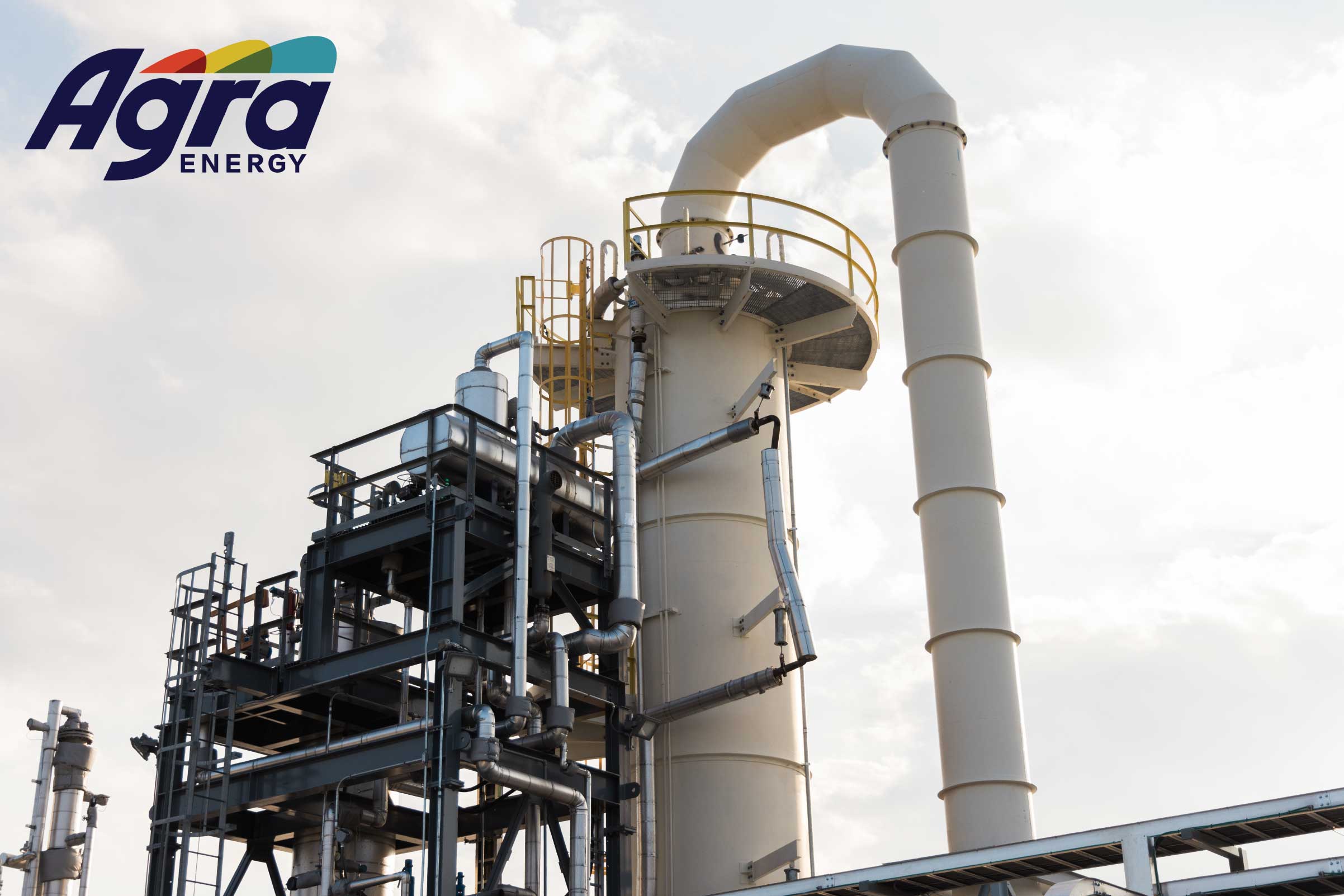
At Agra Energy’s biogas-to-fuels facility in New Franken, Wisconsin, HYCO1’s catalyst technology was deployed as an upgrade in the plant’s SMR front-end.
Published operating results document more than 3,000 hours of stable performance, with no observed deactivation or abnormal pressure drop. The case study reports operation near a 2:1 steam-to-carbon ratio and controlled H2:CO composition near 2.2:1, demonstrating practical reforming flexibility at commercial scale.
Read the operating results and technical explanation
How to work with us
Adopt our technology platform your way.
Whether you're upgrading an existing plant, licensing for new construction, or want us to handle everything end-to-end.
01
Catalyst Swap
Already running an SMR or ATR? Drop in our CORE™ Catalyst for immediate efficiency and output gains — no major capital required.
02
License & Upgrade
Have an existing reforming facility? License CUBE™ Technology to upgrade your current plant — improving carbon efficiency, boosting output, and debottlenecking production without starting from scratch.
03
License & Build New
Planning a greenfield project? License CUBE™ Technology and build the most carbon-efficient syngas facility on the market.
04
Syngas Supply
Don't want the capital burden? HYCO1 designs, builds, owns, and operates the reformer. You receive reliable low-carbon syngas on a supply agreement.
Common questions about CORE™ Catalyst
Is CORE the same catalyst previously called SMR+?
Yes. CORE™ Catalyst brings the products previously marketed as SMR+ Catalyst and CO2 Reforming Catalyst under one name. CORE stands for Carbon Optimized Reforming and supports SMR, DMR, and Bi-Reforming applications.
Do I need an external CO2 feed to improve my existing SMR?
No. CORE provides efficiency, steam-reduction, reliability, and operating-flexibility benefits in existing SMR applications. It also converts byproduct CO2 and residual methane into additional syngas. Adding CO2 feedstock is a further implementation option.
What changes are involved in replacing an SMR catalyst with CORE?
CORE is designed as a drop-in catalyst replacement for existing reformers. HYCO1 works with your team on catalyst loading and operating requirements. Adding CO2 feedstock involves a broader integration scope based on your facility.
How does CORE reduce steam requirements?
Its non-coking chemistry reduces the need for excess steam to suppress carbon buildup. Steam remains a process input in SMR and Bi-Reforming, with feed proportions adjusted for the required output.
Does CORE support true dry methane reforming?
Yes. CORE converts methane and CO2 into syngas without steam input in DMR operation, producing a true 1:1 hydrogen-to-carbon-monoxide ratio without graphitic coke buildup.
How is the H2:CO ratio controlled?
By adjusting the methane, CO2, and steam feed proportions. CORE supports H2:CO ratios from 1:1 to 3:1 directly from the reformer. Downstream separation can provide the purity or individual gases your process requires.
Can CORE support hydrogen production?
Yes. CORE supports hydrogen-rich syngas production through steam reforming. Additional carbon monoxide can also be converted into hydrogen in downstream shift reactors, with hydrogen recovered through the facility’s purification system.
Get Started
Discuss your reformer or CO2 utilization project.
Whether you want to improve an existing SMR, integrate CO2 feedstock through Bi-Reforming, or develop a new syngas facility, HYCO1 can help identify the route that fits your process.
Tell us about your current operation or proposed project, available feedstocks, and the gases or products you want to produce. Preliminary project information is enough to start the conversation.